Comprehending what unfolds behind the spinning reels and the virtual card tables changes a casual pastime into a authentically engaging experience. In Denmark, a mature and well-regulated market, players who explore platforms like slotorocasino free spins quickly discover that the real magic is not in levers or lucky charms, but in sophisticated mathematical models and rigorously tested software. Every outcome is determined by complex algorithms created to replicate the unpredictability of physical games while ensuring a verifiable statistical edge for the house over the long run. By removing the curtain on randomness, volatility, and return percentages, a player obtains a clearer picture of why a session develops the way it does. This awareness does not guarantee a win, but it dismantles the myths that often lead to frustration, replacing them with a deep appreciation for the intricate engineering that powers modern digital entertainment. It is a world where mathematics meets design, forming a structured playground governed by logic rather than fate.
The Heart of Randomness
The heart of every digital game lies in a piece of software known as the Random Number Generator, or RNG. It is the digital replacement to mixing a deck of cards or tossing physical dice, but it operates at a speed and complexity that is nearly impossible to understand during a live session. The RNG is an algorithmic engine that constantly loops through billions of number combinations every second, even when no one is presently playing. The specific instant a player hits the spin button or calls for a card, the system captures the current numerical value from that stream and transforms it into a specific game outcome. This assures that the result is separated from the server’s load, previous wins, or future jackpots. It does not remember that a slot has been “cold”; it simply computes a fresh set of coordinates based on pure entropy. The technology guarantees that independence is complete, making every single event an isolated trial with no effect on what comes next.
The Starting Point and the Algorithm
To understand just how immune these systems are to prediction, one must examine the concept of seeding. The initial value fed into the RNG is often derived from a genuinely unpredictable source, such as atmospheric noise or the precise timing of hardware operations. This guarantees that the sequence never reoccurs in a pattern that a human brain or a computer could spot within a lifetime. The visual depictions on the screen, the spinning symbols and the bouncing dice, are merely animations playing out a predetermined conclusion. The software already knows the outcome the moment a hand is initiated, and the dramatic displays are crafted for entertainment value, not for active computation. For players in Denmark, this is a critical consumer protection mechanism, as it ensures that no operator or third party can manipulate an individual round. The reliability of the system lies not in concealing the truth, but in rendering the truth mathematically unassailable long before the reels stop spinning.
The Mathematical Architecture of Slot Machines
Beyond the RNG, the core logic of a slot machine is based on a virtual reel mapping system that significantly differs from what the eye perceives. A physical slot reel has a limited number of stops, usually 20 to 22 symbols. A digital slot, however, uses a virtual reel with a staggering number of stops, sometimes ranging into the hundreds or thousands per reel. The displayed symbols are merely a visual window onto this deeper mathematical matrix. A jackpot symbol might look to occupy one spot on the visible reel, but in the virtual mapping, it might correspond to a single number out of 500 stops. This gap allows developers to create games where a huge payout appears tantalizingly close on every screen, yet is mathematically improbable. It is a subtle art of illusion, where near-miss scenarios are engineered not as malice, but as a result of compressing a large virtual map into a small visible grid, increasing the tension without changing the absolute odds of the next spin.
Paylines and Ways to Win Structures
The progression from the single horizontal payline to the “ways to win” engine represents a fundamental shift in game mathematics. Classic machines needed matching symbols to land on a particular pre-drawn line, typically reading left to right. The modern approach left behind these strict paths entirely. In a 243-ways or Megaways setup, winning combinations are made by landing matching symbols on adjacent reels, regardless of their vertical position. This eliminates the player’s anxiety about “missing” a line. The cost of this coverage is commonly baked directly into a fixed base bet, instead of requiring the player to purchase individual lines. The calculation behind each spin increases the number of symbols on each reel to generate the total possible ways. When a game promotes up to 117,649 Megaways, it is actively changing the height of the reels on every spin, creating a variable volatility structure where the enormous number of winning paths fluctuates wildly from one moment to the next, keeping the player perpetually engaged.
Bonus Rounds and Its High-Rent Structure
Modern gameplay mechanics progressively rely on bonus rounds, yet many players fail to recognize these features are already priced into the core RTP calculation. When a slot promotes a “free spins” feature, those spins are hardly ever free in a mathematical sense. The RNG is designed to take a contribution from all losing base game spins to fund the future bonus round. This is why base game payouts in feature-rich slots often appear punitive compared to classic fruit machines. The software is purposefully banking value, holding it in escrow to distribute later during the high-drama moments. If a game takes away the low-paying symbols during a free spin round, it is not a generous gift; it is simply the software returning the value the player earlier sacrificed. Understanding this redistributed risk model illuminates why buying a direct “bonus buy” feature often comes at a premium multiplier. The provider must charge an entry fee that compensates for the expected statistical return of that feature, ensuring the house edge remains consistent regardless of how the bonus was triggered.
Progressive Jackpot Accumulators
Progressive jackpots function on an entirely different economic engine, acting as a networked wealth transfer mechanism. A tiny fraction of every qualifying wager, a seed percentage, is siphoned from the player’s bet before the standard RNG check occurs and injected into the prize pool. It rises across a network of machines or casinos until a specific rare coincidence of symbols initiates the drain. The base game RTP during this chase is often significantly lower than a standard non-jackpot slot because a portion of the bet is being exported to the shared network. The slot operates like a lottery terminal attached to a regular game. For a player in Denmark targeting these pools, the primary variable is the “must-hit-by” mechanism or the seed reset value. Statistically, the optimal time to engage is when the jackpot has grown beyond the cost of the average number of spins required to trigger it, a fleeting condition that turns the house edge momentarily negative, creating a hyper-rare positive expectation environment within the regulated framework.
Dissecting Return to Player Percentages
The term Return to Player, commonly abbreviated as RTP, is typically the most misunderstood metric in the casino environment. It is a hypothetical time average, computed over tens of millions of modeled rounds, not a per-session promise. If a slot machine at Slotoro Casino indicates an RTP of 96.5 percent, it does not mean a player who adds 1000 kroner will walk away with 965 kroner after an hour. Instead, it means that for every 1000 kroner bet by the entire player base over the game’s duration, the machine is set to retain 35 kroner and return 965 kroner as winnings back to the collective. The distribution of that return is significantly skewed; a large chunk is often reserved for infrequent, high-value jackpots. This generates a landscape where a substantial percentage of short-term sessions end in a loss, a few break even, and a tiny fraction result in enormous wins. Understanding this bigger picture prevents the player from falling into the trap of chasing losses under the false assumption that the game “owes” money back.
Volatility Shapes the Journey
While RTP describes the destination, volatility or variance illustrates the picture of the road traveled. A high-volatility slot is engineered to deliver long sequences of dead spins or minimal payouts, punctuated suddenly by explosive wins that seek to cover the previous drain. This model targets the psychological thrill of the hunt, attracting to risk-takers who desire the adrenaline of a massive hit. On the other hand, a low-volatility game functions like a gentle pendulum, providing regular but modest wins that keep a bankroll afloat without sparking major swings. Developers chart these profiles using hit frequency, which dictates how often a spin results in any win, irrespective of size. A game with a high hit frequency might trigger a win on 35 percent of spins, creating a constant drip of positive feedback. These settings are not secrets; they are located in the game sheets of a platform like Slotoro Casino, allowing knowledgeable Danish players to align their session budget with their emotional threshold for risk.
The Logic of Card and Table Games and Live Casino Dealers
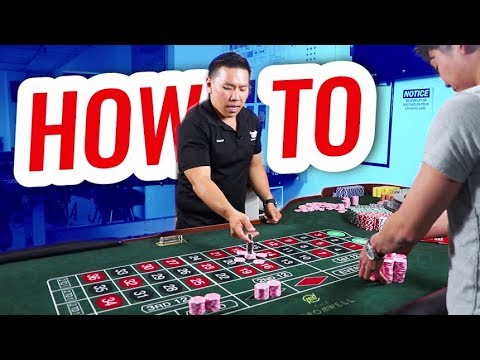
While slots depend on virtual mapping, table games are governed by strict combinatorial probability that has been developed over centuries. The atmosphere on a gaming site like Slotoro Casino mirrors the physical world with absolute precision. In standard digital blackjack, the software mimics a continuous shuffling machine, implying the cards are shuffled after every hand without memory of the discard tray. This makes card counting an outdated impossibility. The strategic element therefore is based entirely on basic strategy determined against the fixed rules of the dealer. Roulette converts physics into numbers; the virtual wheel uses the RNG to create a spin speed and a ball drop point, ensuring the distribution aligns with the expected 1 in 37 probability for European variants. The financial model is upheld not through trickery, but through the green zero pocket, which slightly alters the balance. It is a clear and transparent house edge, starkly different from the complex variance of slots, offering a slower burn where skill in decision-making can directly affect the loss rate over a session.
The Interactive Factor in Real-Time Casino Environments
The rise of live streaming technology ushered in a hybrid layer where the RNG takes a backseat to tangible physics, a segment heavily favored by Danish players looking for trust through transparency. In a live casino studio, a real dealer handles actual cards or a physical roulette ball. The random outcome is generated in the physical world and then transformed through Optical Character Recognition technology. Sensors in the table immediately read every card drawn and convert it into data that appears on the player’s screen. This process eradicates algorithmic skepticism; if the dealer accidentally flips a card, the distortion is noticeable to the human eye. The house edge remains identical, enforced by the immutable rules of the game and the payout structures, not by a hidden code. It is a comeback to mechanical authenticity, yet it integrates seamlessly with digital interfaces, allowing for live chat and instant side bets while the physical reality of the spinning ball determines the winner.
Fund Management and Playtime Endurance
The connection between session time and the mathematical grinds of the games is a key idea for sustainability. Every game has a house edge, but the rate at which that margin erodes a fund, known as the “wear”, varies vastly. A slot machine cycling every three seconds cycles through a wager much quicker than a full table of live blackjack where cards must be distributed and chips counted. This tempo is a silent budget killer. A player with 500 kroner playing a 10 kroner spin on a 96 percent RTP slot with fast turbo settings can permanently erode the deposit down much sooner than the RTP implies, simply due to the volume of hands per hour. The strategy of session sustainability is therefore not about modifying the odds, but about adjusting the speed. Reducing the bet size relative to the fund increases the number of attempts, leveling the short-term volatility and allowing the fun fund to survive the natural droughts that the variance structure ensures will occur.
- A fund of 1,000 kroner on 2 kroner plays delivers approximately 500 plays before exhaustion, giving a good probability of hitting several special rounds.
- The similar budget on 20 kroner rounds yields only 50 plays, making the session heavily reliant on a single lucky strike within the first 60 seconds.
- Ignoring the “Max Bet” button is a basic rule of budget discipline unless the bet makes up a small part of a percent of the total designated fund.
- Time-based boundaries are often more psychologically effective than stop-losses, as they circumvent the human inclination to inflate risk after a abrupt loss.
The Future of Play Dynamics
The upcoming boundary of gameplay mechanics in the Danish market involves adaptive, real-time modifications that align the gambling math to the gambler’s risk level without violating regulatory boundaries. Creators are progressing past static 96 percent RTP charts toward backend game aggregation where a provider can adjust volatility on the fly based on player feedback https://www.math.ku.dk/english/about/news/the-ever-winning-lottery-ticket/ loops. A game might sense through interaction data that a player is falling below a irritation point and subtly shift the base game hit frequency to provide more sensory rewards, while relatively decreasing the size of the infrequent big wins to preserve the total return rate compliant. This is not distorting the chance results, but switching the core algorithm between various approved modes. The display aspect remains the same, yet the core simulated reel system morphs to sustain a flow condition. In this future environment, machine intelligence acts as a croupier that balances the mental stimulation graph, making sure the play period feels continuously gratifying, even as the unchanging odds principles maintain the lasting operational framework stable.